
Selling your miscanthus directly: a great example in the 79
Novabiom supports producers in implementing a commercial approach for the direct sale of their miscanthus. This work is an essential part of our raison d'être. We want to promote a model where farmers plant miscanthus and develop local markets.
[…] Novabiom, the driving force behind this industry, which it launched in 2006, supports farmers in successfully establishing, producing, and promoting their miscanthus crops. Novabiom and its partners are involved in a regional initiative. Farmers are rebuilding ties by promoting miscanthus through short supply chains, contributing to a circular economy and thus becoming key players in their region. […]
Excerpt from Novabiom's raison d'être
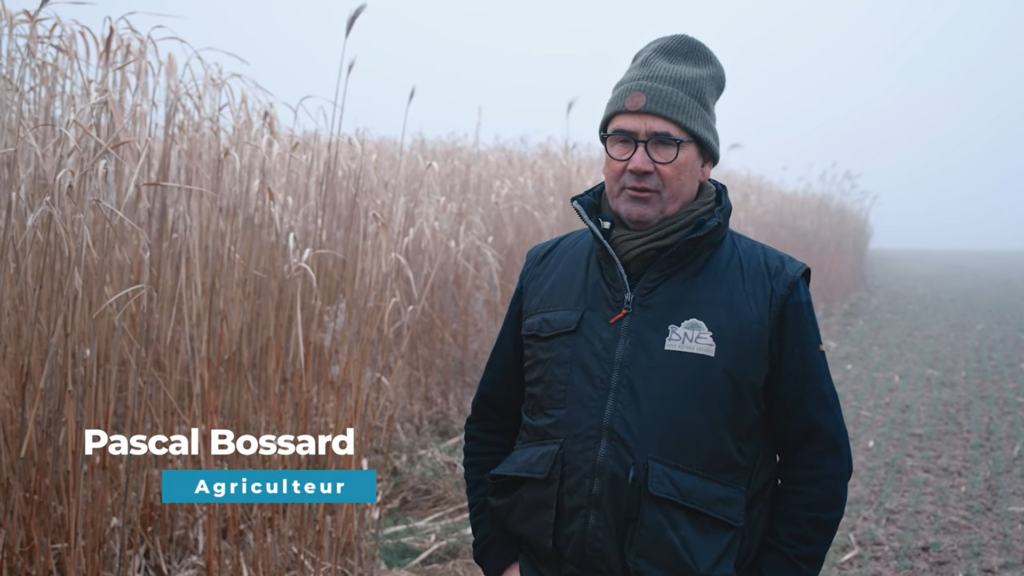
And Mr. Bossard, a farmer in the Deux-Sèvres region, provides a fine example of a successful diversification model in this video produced by Eau17 as part of the Re-Sources program.
In various ways, we are working to support farmers themselves in taking charge of miscanthus cultivation in their own regions:
- Meeting at the farm between the farmer and Novabiom agricultural advisor to discuss local uses for miscanthus and answer questions.
- Sharing experiences and feedback from R&D work via our website, social media, etc.
- Publishing guides (planting, boiler project development) to boost collective skills.
- Training and support in implementing a sales approach through themed webinars.
- Taking marketing tool requirements into account: customizable labels, neutral technical data sheets, branded packaging, bulk/bag exchange, etc.
By selling their miscanthus directly, farmers are revitalizing their regions and reintroducing local economic circuits. This relocation of agricultural markets creates a virtuous value chain: fewer intermediaries and greater use of local resources. It also strengthens the resilience of farms. Beyond the economic benefits, it is also a concrete response to environmental and social challenges. Each stakeholder thus becomes part of a more autonomous, sustainable agriculture that is rooted in its local area.